
Free tool Size any room in one minute
Air Conditioning BTU Calculator for UK Rooms
Our free air conditioning BTU calculator shows the unit size your room needs, in BTU/h and kW, for homes in London and the South East. Enter the room size, sun, insulation and number of people. Then send the result to us for a fixed price with VAT included.
- Free and instant
- Results in BTU and kW
- Size confirmed at survey
Prices last checked: October 2026

Free tool
Find your room size in BTU and kW
A BTU calculator estimates how much cooling a room needs, in British Thermal Units per hour (BTU/h) and kilowatts (kW). The Aircova tool starts at 100 to 125 watts per m² for a room with a 2.4m ceiling. It then adds for sun, insulation, room type and people.
Your room needs about
7,700 BTU/h
Cooling need 2.3kW, range 6,800 to 8,500 BTU/h
Suggested unit: 2.5kW
Based on 20 m², a 2.4m ceiling, a bedroom, average sun, good insulation and 2 people.
A 2.5kW wall-mounted unit is fitted from £2,195 with VAT, including up to 3m of pipe.
Send my result on WhatsAppThis is a guide. Our free survey confirms the size before we quote.
The method
How the air conditioning BTU calculator works
The tool follows the same rule of thumb our surveyors start with. A normal UK room with a 2.4m ceiling needs about 100 to 125 watts of cooling per m² of floor. We use the middle of that band for the main figure and show the full band as a range.
- Floor area. Length times width gives the m². A 5m by 4m bedroom is 20m².
- Base load. 20m² at 100 to 125 W per m² needs 2.0 to 2.5kW of cooling.
- Ceiling height. Taller rooms hold more air, so a 3.0m ceiling scales the load up by 25%.
- Room and site factors. Lofts, conservatories, kitchens, strong sun and poor insulation each add a set percentage.
- People. Each person beyond two adds 100 W, about 340 BTU/h of body heat.
- Unit size. We round up to the next standard size: 2.0, 2.5, 3.5, 5.0 or 7.0kW.
To turn watts into BTU/h, the tool multiplies by 3.412. So 2,000 W is about 6,800 BTU/h. It then picks the smallest standard unit whose rated output covers the figure.
A calculator cannot see your room. Window size, which way the glass faces and what sits above the ceiling all change the answer. That is why we treat the result as a starting point and confirm it with a free survey before we quote.
Quick reference
Room size chart: m² to BTU and kW
Use this room size chart if you only know the floor area. It assumes a 2.4m ceiling, average sun, good insulation and two people.
| Floor area | Cooling need | BTU/h | Suggested unit |
|---|---|---|---|
| 10m² | 1.0 to 1.3kW | 3,400 to 4,300 | 2.0kW or 2.5kW |
| 15m² | 1.5 to 1.9kW | 5,100 to 6,400 | 2.0kW or 2.5kW |
| 20m² | 2.0 to 2.5kW | 6,800 to 8,500 | 2.5kW |
| 25m² | 2.5 to 3.1kW | 8,500 to 10,700 | 3.5kW |
| 30m² | 3.0 to 3.8kW | 10,200 to 12,800 | 3.5kW |
| 40m² | 4.0 to 5.0kW | 13,600 to 17,100 | 5.0kW |
| 50m² | 5.0 to 6.3kW | 17,100 to 21,300 | 7.0kW |
| 60m² | 6.0 to 7.5kW | 20,500 to 25,600 | 7.0kW or two units |
Between two sizes? A room of 22m² sits right on the line between 2.5kW and 3.5kW. If it faces south, sits under the roof or has a bay window, go up. If it is shaded and well insulated, the smaller unit will cope and run more steadily.
Above about 60m², one large wall unit struggles to spread air evenly. Two indoor units on a multi-split system cool a big open plan space more evenly than a single 7.0kW unit at one end.
Conversion
BTU to kW conversion table
UK installers quote in kW, while many shops and portable units still use BTU. One kW equals about 3,412 BTU/h, so the two are easy to swap.
| Unit size | Exact BTU/h | Often sold as | Typical room |
|---|---|---|---|
| 2.0kW | 6,824 | 7,000 BTU | Small bedroom or study |
| 2.5kW | 8,530 | 9,000 BTU | Bedroom up to about 20m² |
| 3.5kW | 11,942 | 12,000 BTU | Lounge, loft or sunny bedroom |
| 5.0kW | 17,060 | 18,000 BTU | Open plan kitchen and dining room |
| 7.0kW | 23,884 | 24,000 BTU | Large open plan space |
The two formulas
You only need one number to convert either way. Shop listings often round up, so a “9,000 BTU” unit is usually rated 2.5kW.
- kW to BTU/h
- Multiply by 3,412. A 3.5kW unit gives about 11,900 BTU/h.
- BTU/h to kW
- Divide by 3,412. A 12,000 BTU unit is about 3.5kW.
- Watts per m²
- 100 to 125 W per m² is about 340 to 430 BTU/h per m².
Output is not power use
The kW on the label is the cooling or heating the unit delivers, not the electricity it draws. An inverter split gives about 3 to 4 kW of heat for every kW of electricity, with a SCOP around 4.
So a 3.5kW unit does not cost 3.5kW of power to run. Our air conditioning running costs guide works through real figures per hour. Each indoor unit we fit runs on R32 refrigerant and lists its SEER and SCOP on the quote.
You can compare cooling and heating ratings across the Daikin air-to-air heat pump range before your survey.
What the calculator adjusts for
What changes the size of unit you need?
Floor area sets the base. These six things push the figure up, and the calculator applies each one as a set percentage or wattage.
Ceiling height
Scales with the room volume
The base figure assumes 2.4m. Victorian and Edwardian terraces in London often have 3.0m ceilings downstairs, which adds 25% to the load.
Sun and glass
Add 10% for strong sun
Large south or west facing windows let in heat all afternoon. Bay windows, glazed doors and skylights count too, even with blinds drawn.
Insulation
Add 15% if it is poor
Single glazing, solid brick walls and a thin loft layer let heat in during summer and out in winter. Good double glazing keeps the size down.
Loft rooms
Add 20%
The roof sits right above you, and roof windows face the sky. Loft conversions are often the hottest rooms in the house by mid afternoon.
Conservatories
Add 40%
Glass walls and a glass or polycarbonate roof gain heat fast. The same unit also heats the room in winter, so the space stays usable all year.
Kitchens and people
Add 10%, plus 100 W per extra person
Ovens, hobs and fridges give off heat, so kitchens get 10% more. Every person beyond two adds about 100 W of body heat.
A home office with several screens behaves like a room with an extra person or two. Add them to the people box for a fairer result.
Get it right first time
Oversizing and undersizing: common mistakes
Bigger is not always better. An oversized unit cools the air quickly, then switches down before it has pulled moisture out. The room feels cold but clammy, and the compressor cycles more than it should.
An undersized unit has the opposite problem. It runs flat out all afternoon in a heatwave and still cannot hold the set temperature. That costs more to run and wears the unit faster.
The other mistakes we see on surveys are easy to avoid. People measure only the part of an open plan room they use, forget the glazed kitchen extension, or size a loft room like a bedroom downstairs. Some buy by BTU from a portable unit listing, where the figures are not comparable with fitted split units.
A modern inverter helps here. It slows the compressor down when the room is near target, so a unit one step large is less of a problem than it used to be. Too small is still too small.
Sizes by room
What size air conditioner do I need for each room?
Most rooms in UK homes fall into one of three sizes. These are the figures we see most often when we survey homes across London and the South East.
Bedroom
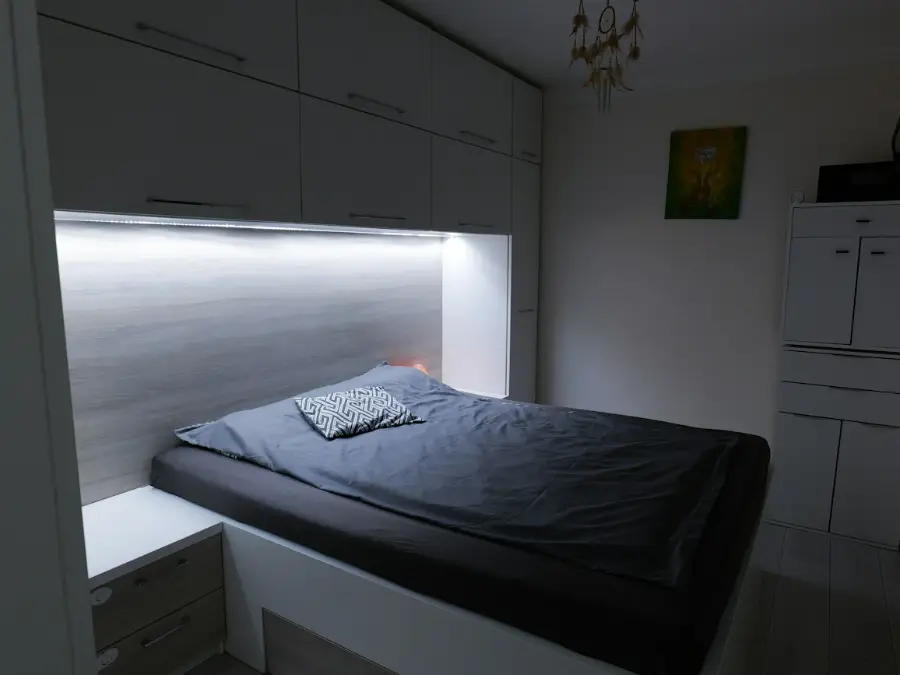
A 2.5kW unit suits most bedrooms up to about 20m². Pick a model with a quiet night mode, from about 19dB on some ranges.
Bedroom air conditioning
Lounge
Living rooms are larger and often sunnier, so 3.5kW is the usual choice. Open plan lounges with a kitchen may need 5.0kW.
Wall-mounted units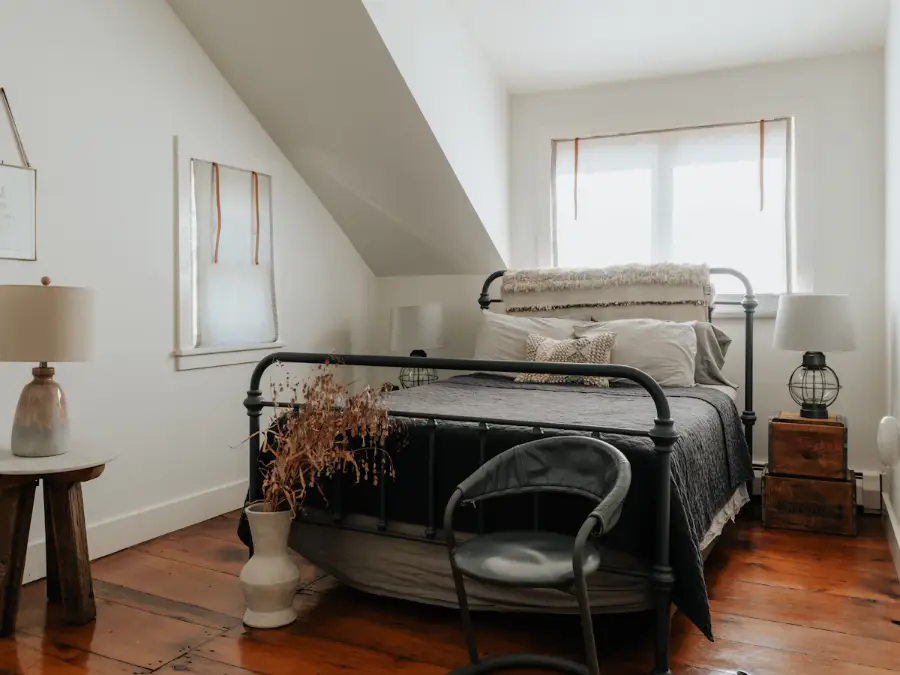
Loft room
The roof adds heat, so a loft usually needs one step up from the same room downstairs. A 3.5kW unit is common.
Loft air conditioningNext step: get a fixed price
Send your calculator result on WhatsApp with a photo of the wall, and we reply with a price. You can also get an instant quote online in about two minutes.
Fitted prices for a single wall-mounted split start from £2,195 for 2.5kW, £2,395 for 3.5kW, £2,695 for 5.0kW and £2,995 for 7.0kW, with VAT. See what changes the figure in our air conditioning cost guide.
More than one room
Run the calculator once per room. Two to five rooms can share one outdoor unit on a multi-split, from £3,995 for two rooms, with each room sized on its own.
For a whole floor with nothing on the walls, ducted air conditioning sizes the system for the total load. Both sit within our wider air conditioning installation service.
Every system we fit is a split air-to-air heat pump, so it heats as well as cools. Installing one is not a DIY job: the GOV.UK F gas guidance requires a qualified engineer and a certified company. Thinking about a plug-in unit instead? Read our portable vs split guide.
FAQs
BTU and room sizing FAQs
How many BTU do I need per m²?
Most UK rooms need about 340 to 430 BTU/h per m², which is 100 to 125 watts per m². That assumes a 2.4m ceiling, average sun and good insulation. Add 20% for a loft, 40% for a conservatory and 10% for a kitchen or strong sun. Our calculator applies these for you and rounds up to a standard unit size.
How do I convert BTU to kW?
Divide the BTU/h figure by 3,412 to get kW. A 9,000 BTU unit is about 2.6kW and a 12,000 BTU unit is about 3.5kW. To go the other way, multiply kW by 3,412. UK installers quote fitted units in kW, while portable units and many shop listings still use BTU.
What size air conditioner do I need for a 20m² room?
A 20m² room usually needs a 2.5kW unit, about 8,500 BTU/h. That covers a bedroom or study with average sun and good insulation. If the room is a loft, faces south or has large windows, choose 3.5kW instead. Our fitted price is from £2,195 for 2.5kW and from £2,395 for 3.5kW, with VAT.
Is 9,000 BTU enough for a bedroom?
Yes, 9,000 BTU is enough for most bedrooms up to about 20m². That size matches a 2.5kW split unit, the most common bedroom choice. A very sunny bedroom, one under the roof or one above 22m² is better served by 12,000 BTU, which is 3.5kW. Check the night mode noise level as well as the size.
Is it better to oversize an air conditioner?
No, one step up is fine but more than that causes problems. An oversized unit cools quickly, then cycles down before it removes moisture, so the room feels damp and cold. It also costs more to buy. Inverter units cope better with a little extra size, which is why we round up to the next standard size and no further.
How many BTU does a conservatory need?
A conservatory needs about 40% more cooling than a normal room of the same size. A 12m² conservatory works out at roughly 5,700 to 7,200 BTU/h, so a 2.0kW or 2.5kW unit usually covers it. A larger one with a glass roof and full sun often needs 3.5kW. We check the roof type and glazing at the survey.
Do portable air conditioners need more BTU?
Yes, a portable unit usually needs a higher BTU rating for the same room. The hot exhaust hose sits in the room, and the gap around the window lets warm air back in. A fitted split keeps the compressor and condenser outside, so its rated output reaches the room. Compare like with like when you read BTU figures.
Does the unit size matter for heating as well as cooling?
Yes, the same unit heats the room in winter, so we check both. On most split units the heating rating is a little higher than the cooling rating. In a room with poor insulation or a lot of glass, the winter heat loss can decide the size rather than summer heat. Our survey looks at both before we confirm the kW size.
Get your fixed price
Tell us the room and the size the calculator suggested. We will check it and call you with a fixed price, with no pressure and no obligation.
- Reply within one working day
- Free home survey
- Price confirmed in writing
Prefer to talk? Call 07403 664179
Monday to Friday 8am to 6pm, Saturday 9am to 5pm
We only use your details to prepare your quote. See our privacy policy.