
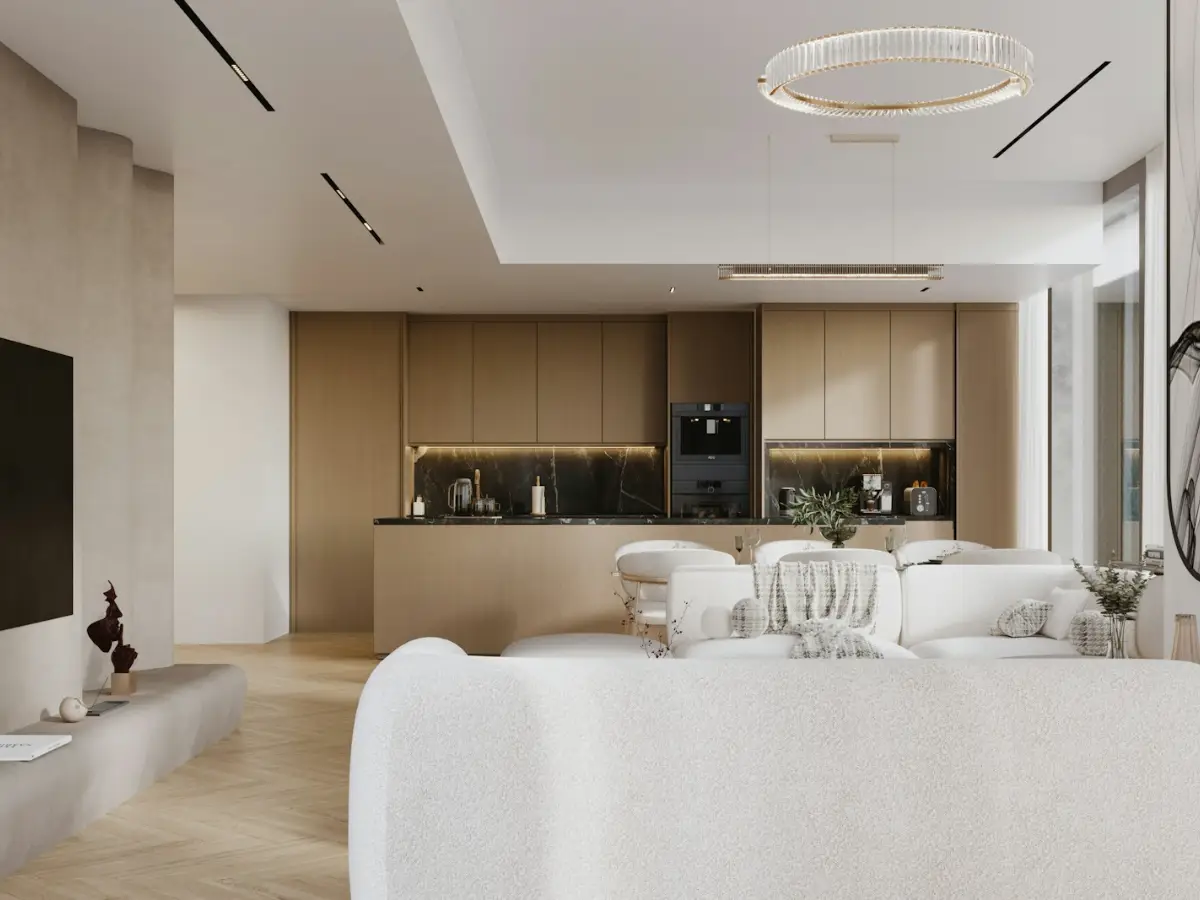
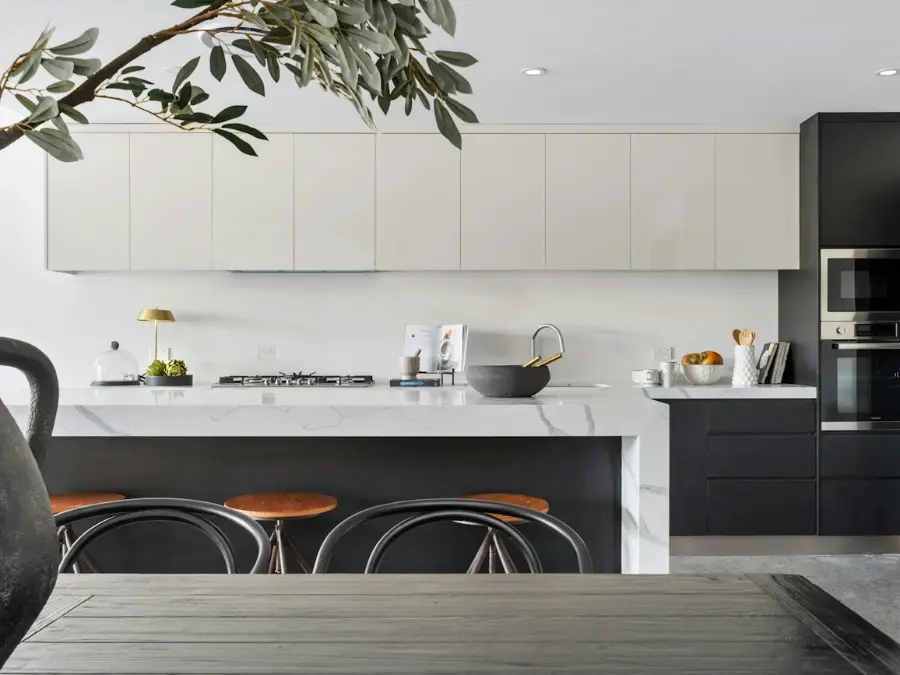
Hidden systems Only slim grilles on show
Ducted Air Conditioning That Hides in the Ceiling
Ducted air conditioning hides the indoor unit in your loft or ceiling void, so each room shows only a slim grille. Aircova designs and fits ducted systems for homes across London and the South East, from £6,995 fitted with VAT. Each one cools in summer and heats in winter.
- F-Gas certified engineers
- Prices include VAT
- Free survey of your loft or ceiling
Prices last checked: October 2026
How it works
How does ducted air conditioning work?
Ducted air conditioning is a split system where the indoor unit sits out of sight in a loft or ceiling void. Insulated ducts carry cooled or warmed air to slim grilles in each room. Aircova surveys the space, designs the duct runs and fits the whole system at a fixed price.
The outdoor unit is the same kind of condenser you see on any split system. It sits on a wall bracket or ground stand outside. A copper refrigerant pipe run, a power cable and a condensate drain join it to the hidden unit. Every system we fit runs on R32 refrigerant with an inverter compressor.
The hidden indoor unit
The indoor unit is a flat box that hangs from the joists in a ceiling void or stands on a platform in the loft. A fan inside pushes air across a cold or warm coil, and that air goes into the ducts.
Ductwork and grilles
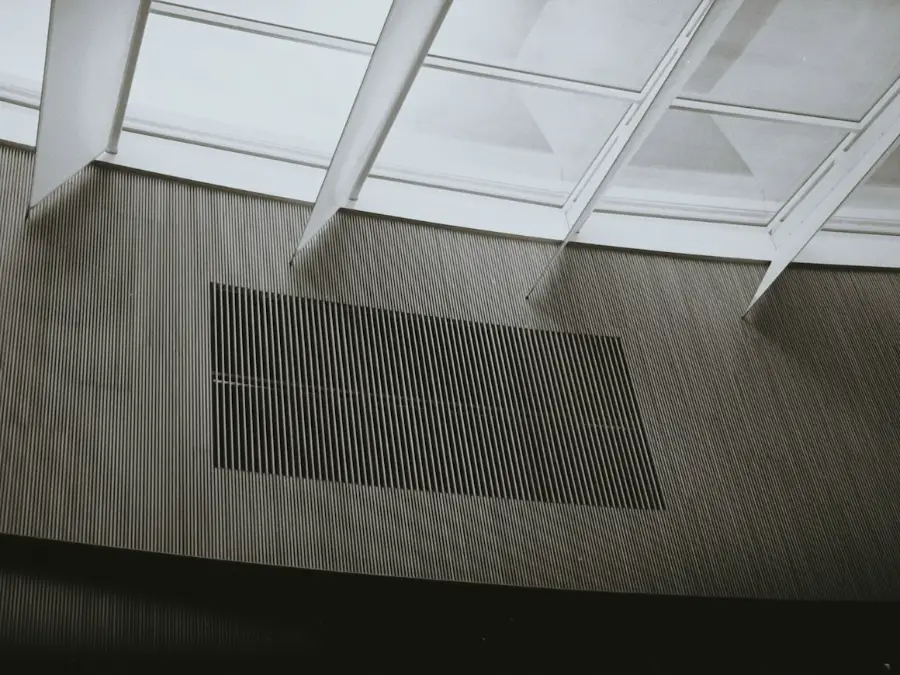
Insulated ducts branch off the unit to each room. Air comes out through a linear slot grille or a small square diffuser in the ceiling. Some homes use wall grilles near the top of the room instead. We plan grille positions so air spreads across the room rather than falling onto a sofa or bed.
Return air and zoning
The unit also needs to pull air back in. A return grille, often in the hallway or landing ceiling, draws room air back to the unit, where it passes through a filter. Doors need a small gap at the bottom, or a vent, so air can find its way back.
One ducted unit has one thermostat, so every room it serves gets the same setting. If you want rooms at different temperatures, we add motorised dampers in the ducts, or fit a separate unit for each floor. We talk this through at the survey, because it changes the price.
Is this central air conditioning?
Usually, yes. The American idea of central air means one hidden plant feeding vents through the house. Most quotes for central air conditioning UK homes receive are for a ducted split system like this one.
Is it right for you
Which UK homes suit a ducted system?
A ducted system is the right choice when you want cool, quiet rooms and nothing on the walls. It is the wrong choice when there is nowhere to hide the unit and ducts. The space above your ceiling decides more than anything else.
Ducted air conditioning for new builds and renovations
The best time to fit ducts is when ceilings are already open. A full renovation, a new build or a large extension lets us run ducts and pipework before plasterboard goes up. That keeps costs down and leaves no boxing in.
- Renovations where ceilings are coming down anyway
- New builds and extensions at first fix stage
- Loft conversions, with the unit in the eaves space
- Large detached homes with deep floor voids
- Period homes where a white wall unit would clash with cornicing
Loft-mounted ducted units for top floors
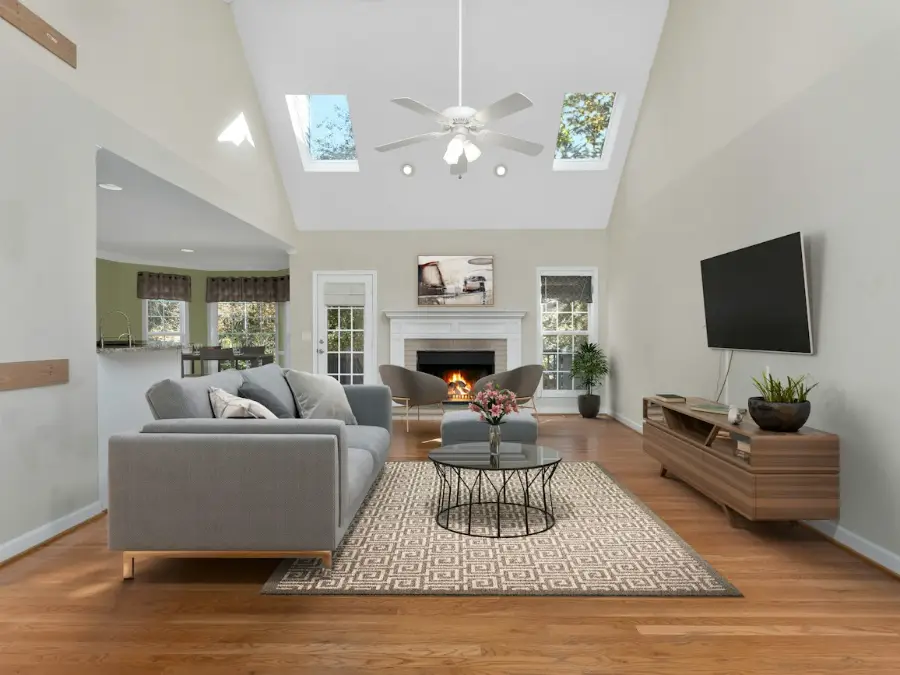
In many London houses the easiest route is through the loft. Loft-mounted ducted units sit on a boarded platform and feed grilles in the bedroom ceilings below. You get cool bedrooms with no ceiling work beyond a few neat cut outs.
When ducted is not the right fit
Some homes simply do not have the space. A flat with a concrete ceiling and no void, or a room with a low ceiling that cannot lose any height, rarely works. In those cases a wall or floor unit is the honest answer.
For one room, wall-mounted air conditioning is quicker and far cheaper. For two to five rooms without building work, multi-split air conditioning runs several indoor units from one outdoor unit. Flat owners can read our page on cooling a flat for the options that do work.
Space you will need
- Ceiling void
- About 25 to 30cm of clear depth for the unit and ducts.
- Loft
- A boarded area near the hatch, with room to reach the filter.
- Access hatch
- A panel beside the unit so it can be serviced without cutting the ceiling.
- Outdoor unit
- A wall or level ground with open air around it.
Fixed prices
Ducted air conditioning prices for 2026
A ducted unit serving two to three rooms starts from £6,995 fitted, including VAT. Larger whole floor systems usually cost £8,000 to £12,000, and we confirm the exact figure in writing after the survey.
Two to three rooms
One hidden unit feeding grilles in two or three connected rooms.
from£6,995
Fitted, VAT included
- One ducted indoor unit, one outdoor unit
- Supply and return grilles
- Wired wall controller
- Cooling and heating
Whole floor
A larger unit, or two units, covering a full floor of a house.
typically£8,000 to £12,000
Fitted, VAT included, after survey
- Duct design for every room on the floor
- Zoning options with dampers
- Usually 3 to 5 days on site
- Cooling and heating
Prices include the units, up to 3 metres of pipework, electrical connection, commissioning and VAT. Long pipe runs, scaffolding or tower access, a consumer unit upgrade and internal wall chasing are priced at the survey.
Across the market, central air conditioning UK wide costs roughly £6,000 to £15,000 for a ducted system. A system fitted at first fix costs less than one retrofitted into finished ceilings.
See how these figures sit against other systems in our air conditioning cost guide. If you already know your rooms, you can get an instant quote online in about two minutes.
| Feature | Ducted | Multi-split | Wall-mounted |
|---|---|---|---|
| Starting price | From £6,995 for 2 to 3 rooms | From £3,995 for 2 rooms | From £2,195 for 1 room |
| Look | Grilles only, nothing on the walls | One unit high on the wall in each room | One unit high on the wall |
| Disruption | Loft or ceiling work, 3 to 5 days | Small wall holes, 2 to 3 days | One wall hole, 1 day |
| Noise in the room | Soft airflow at the grille, fan hidden away | Quiet, from about 19dB on some units | Quiet, from about 19dB on some units |
| Zoning | One setting per unit unless dampers are added | Every room has its own control | One room, one control |
Need help sizing it? A ducted unit is sized for the total heat load of every room it serves, in kW. Our BTU calculator gives a quick figure per room, and 1kW is about 3,412 BTU per hour.
Installation
How long does a ducted install take?
Most ducted systems take 3 to 5 days on site. The work often splits across two visits, because ducts go in before plastering and grilles go in after decorating. Central air conditioner installation works best when we join your project early.
- Survey. We measure the void or loft, plan duct routes and check the outdoor unit spot and fuse board.
- Design and quote. You get the unit size, grille positions and fixed price in writing.
- First fix. Ducts, refrigerant pipe, condensate drain and cable go in before ceilings are closed.
- Units fitted. We hang the indoor unit, mount the outdoor unit and connect the pipe run.
- Second fix. Grilles and the wall controller go in once the ceilings are plastered and painted.
- Commissioning. Nitrogen pressure test, deep vacuum, refrigerant release, airflow balancing and handover.
Timing with your builder matters most. If the plasterers arrive before our first fix, the ceilings have to be opened again. Send us your build programme and we will book around it.
Every engineer on an Aircova job holds the F gas qualification needed to handle refrigerant. You can read the government guidance on F gas for the legal detail. Ducted jobs follow the same checks as all our air conditioning installation work, from pressure test to written commissioning record.

Typical London projects
Victorian terrace renovation
The ground floor ceilings are down during a rewire. We run ducts between the joists to grilles in the front room, back room and kitchen. The outdoor unit sits on a bracket in the side return, and the grilles go in after the decorators finish.
Loft conversion in progress
The new bedroom and en suite sit under the roof and get hot by mid afternoon. We place the unit in the eaves storage behind a hatch, with short ducts to two ceiling grilles. Nothing shows on the sloped walls.
Living with it
Noise, filters and servicing access
Ducted systems are some of the quietest you can have in a room. The fan sits in the void or loft, so you mostly hear a soft rush of air at the grille. Good duct sizing keeps air speed low, which keeps that sound down.
Outside, the outdoor unit runs at roughly 45 to 50dB, like any split system. We place it away from bedroom windows, yours and your neighbours’. Our guide to the quietest air conditioning units compares models if noise is your main worry.
Filters
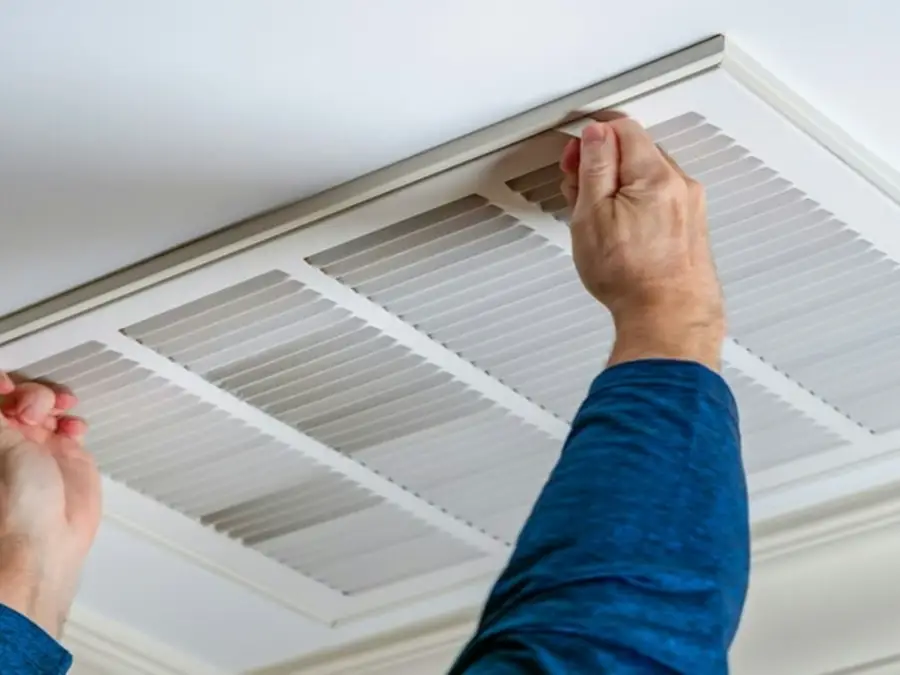
The filter sits behind the return grille or on the unit itself. In summer it needs a rinse every few weeks to keep airflow strong. We fit a hinged return grille where we can, so you clean it from a stepladder, not from inside the loft.
Yearly servicing
A ducted unit needs the same yearly check as any split system, plus a look at the drain and duct joints. Most manufacturers ask for yearly servicing to keep the warranty valid. Our air conditioning servicing covers ducted units from all the main brands.
That is why the access hatch matters. A unit sealed behind plasterboard cannot be cleaned or repaired without cutting the ceiling, and we will not fit one that way.
Heating and planning
Winter heating and planning rules
A ducted split is an air-to-air heat pump, so it also heats. In winter it runs in reverse, taking warmth from the outside air and blowing it through the same grilles. Warm air from ceiling grilles needs good airflow design, which we plan for at the survey.
The Boiler Upgrade Scheme from Ofgem gives £2,500 off air-to-air heat pumps in England and Wales. The heat pump has to fully replace your existing fossil fuel or electric heating and cover all of your home’s space heating, and the installer must be MCS certified. New builds are generally not eligible, so a renovation is a better fit. See who can claim the £2,500 grant before you book.
Planning is usually simple for houses. The government’s note on air conditioning rules says most small home units need no permission if the building’s look is not materially affected. Flats, listed buildings and conservation areas often need consent, so check with your council. Our planning permission guide covers the common cases.
FAQs
Ducted system questions answered
Is ducted air conditioning worth it in the UK?
It is worth it when you are renovating, building or converting a loft, and want several rooms cooled with nothing on the walls. It costs more than wall units, from £6,995 against £3,995 for a two room multi-split. If your ceilings are not being opened, a multi-split usually gives better value for the same rooms.
How much ceiling space does a ducted system need?
Most ducted units need about 25 to 30cm of clear depth in the ceiling void. A loft gives more room, so the unit can sit on a boarded platform instead. You also need space for an access hatch next to the unit, so the filter and drain can be reached for servicing. We measure the void at the survey before we quote.
Can a ducted system be fitted in a house that is already finished?
Yes, if there is a loft or a void you can reach. Top floor rooms are often served from the loft with only small cut outs in the ceilings. Lower floors are harder, because ceilings may need opening and making good. That adds cost and time, which is why most of our ducted jobs happen during a renovation.
Is ducted the same as central air conditioning?
In most UK homes, yes. When people talk about central air conditioning in Britain, they nearly always mean a ducted split system. One hidden indoor unit feeds air through ducts to grilles in several rooms. Our central air conditioner installation follows the same approach, sized for British ceiling heights and room layouts rather than American ones.
Can each room have its own temperature?
Only if the system is zoned. A single ducted unit has one thermostat, so all its rooms share one setting. Motorised dampers in the ducts can open and close to give each zone its own control. Another option is one unit per floor. If every room needs separate control and the price matters most, a multi-split may suit you better.
Is a ducted system noisy?
No, ducted systems are among the quietest in the room. The fan sits in the loft or ceiling void, so you mostly hear soft airflow at the grille. Noise rises if ducts are too small, so we size them for low air speed. The outdoor unit runs at roughly 45 to 50dB, the same as other split systems.
How often do ducted filters need cleaning?
Rinse or vacuum the filter every few weeks in summer, and less often in spring and autumn. It sits behind the return grille, which we hinge where possible so you can reach it from a stepladder. A clean filter keeps airflow strong and running costs down. An engineer should also service the whole system once a year.
Can I have a ducted system in a flat?
Sometimes, but it depends on the ceiling. Many flats have concrete ceilings with no void, which rules out ducts unless you lower the ceiling and lose height. Flats with a deep suspended ceiling can work well. You will also need freeholder consent for the outdoor unit. If there is no void, we usually suggest wall-mounted or multi-split units instead.
Get your fixed price
Tell us about your floor plan, ceilings and loft, and we will call you with a fixed price for a hidden system. Plans or photos help. No pressure and no obligation.
- Reply within one working day
- Free home survey
- Price confirmed in writing
Prefer to talk? Call 07403 664179
Monday to Friday 8am to 6pm, Saturday 9am to 5pm
We only use your details to prepare your quote. See our privacy policy.